Templates & Worksheets
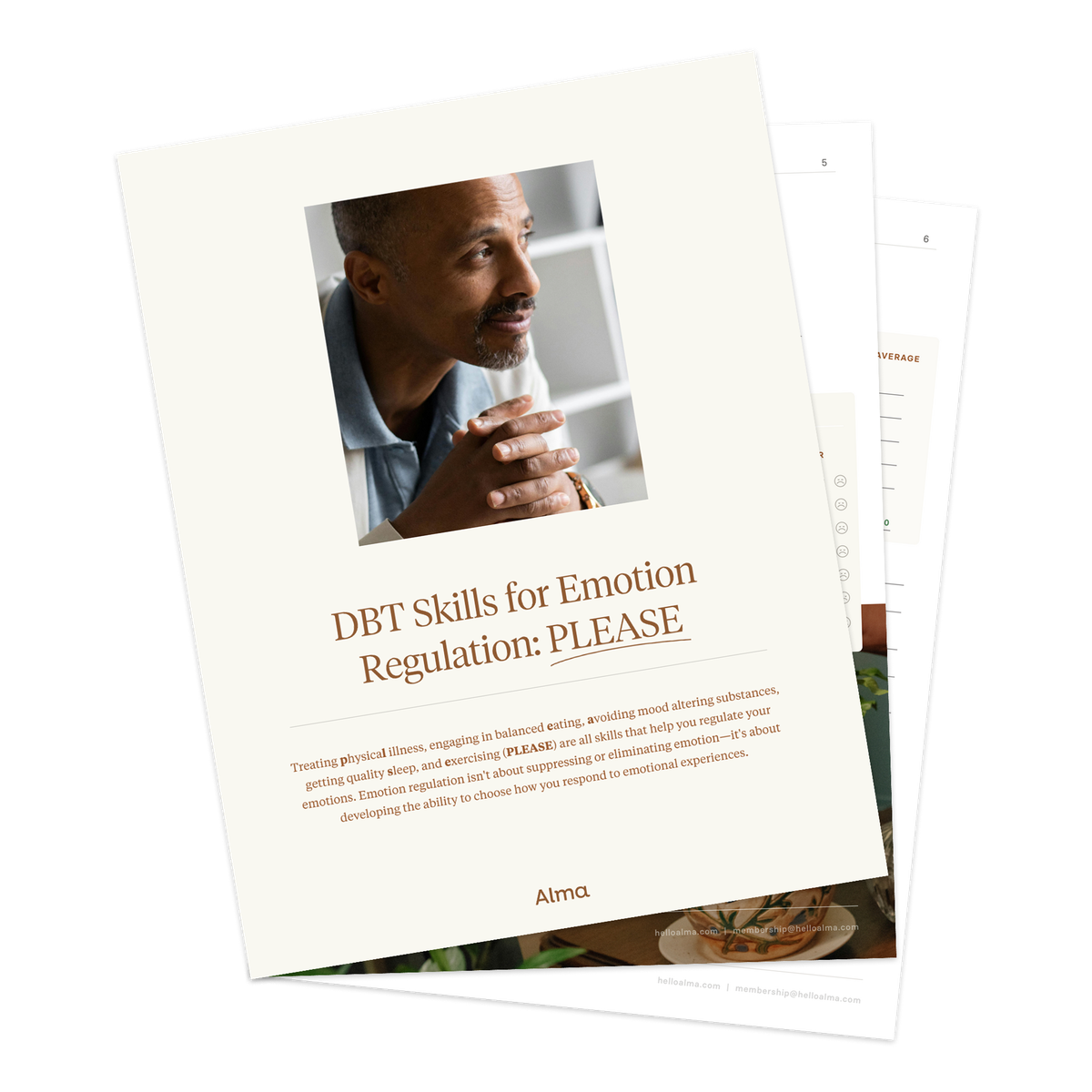
DBT Skills Worksheet for Emotional Regulation: PLEASE
Give clients a structured way to track physical factors that can affect their emotions. Daily logs and weekly reflection questions build self-awareness and lay the groundwork for improved emotional regulation.
Last updated: December 2025
With this resource, you’ll learn how to:
Help clients connect the dots between health behaviors and emotions
Gain insight into client substance use and its impact
Support goal-setting related to emotional regulation
Many clients come in talking about relationship conflicts or emotional overwhelm, but the real issue often starts with basics like skipped meals, poor sleep, substance use, or untreated health problems. When someone’s running on caffeine and three hours of sleep or dealing with chronic pain, they aren’t likely to have the emotional bandwidth for the interpersonal skills you’re trying to teach them.
This Dialectical Behavioral Therapy worksheet supports your client in building the PLEASE skills:
- Treat Physical Illness
- Engage in Balance Eating
- Avoid Mood-Altering Substances
- Get Quality Sleep
- Exercise
Consider using it with clients who struggle with emotional regulation but aren’t sure where to start. Instead of jumping straight into complex emotion regulation techniques, it will help them identify which physical factors are undermining their emotional stability. Many clients find it easier to change concrete behaviors like sleep schedules before tackling more abstract emotional skills.
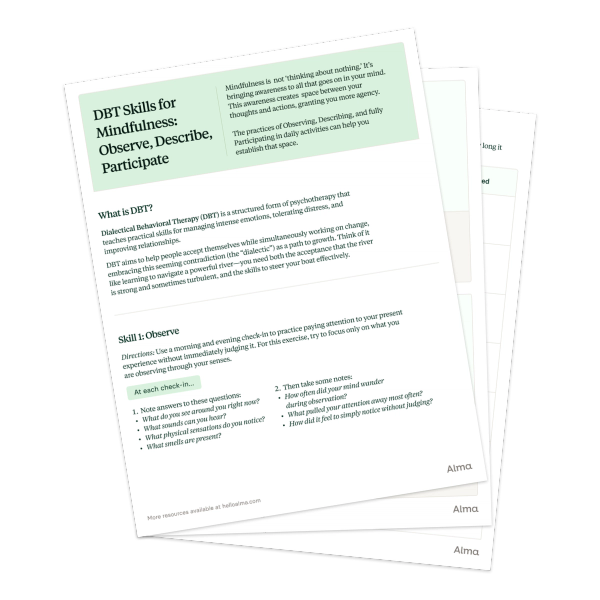
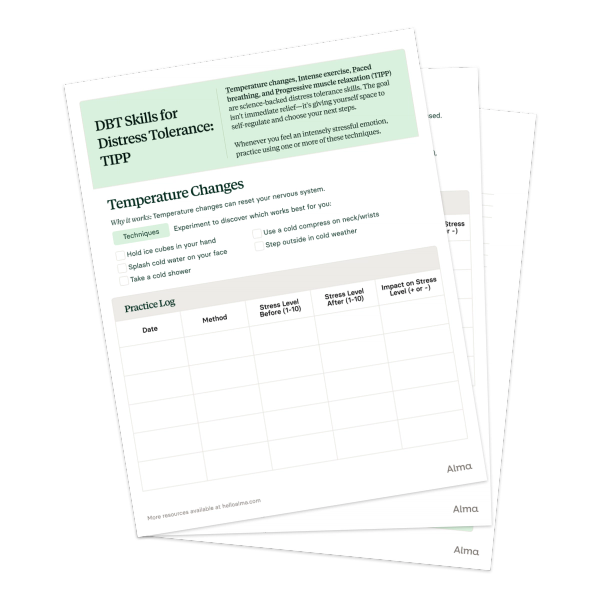

Learn More
Build a thriving private practice with Alma
We believe that when clinicians have the support they need, mental health care gets better for everyone.