Articles
Mental Health Tech 2026: Tools for Therapists & Clients

Like most mental health providers, I’ve been tracking the explosion of mental health tech over the past few years. Not long ago, our options were limited to static exercises, such as worksheets, journaling, and recorded meditations. Now, there’s an expanded universe of mental health apps and tech platforms designed to support therapists and clients on their mental health journey. The potential for tech to help us improve access to care and clinical outcomes is real, but the pace of development and sheer volume of options can be overwhelming.
This high-level—and not by any means exhaustive—guide is here to help you cut through the noise so clinicians and clients alike can figure out which tools make the most sense for their specific needs. Think of it as a roadmap of the current landscape, starting with client-facing tools that have already found a large audience and moving on to specialty tools for providers to use during or outside of treatment.
1. Dynamic Journaling
Dynamic journaling apps take traditional journaling (a favorite therapist recommendation) and make it easier and more effective for clients. In contrast to freeform journaling, these apps prompt clients to help them get unstuck when expressing themselves. In some cases, they can be adaptive to help with habit formation and support long-term goals.
The Research on Dynamic Journaling
The most recent research emphasizes the importance of structure, timeliness, and skill development when journaling in contrast to open-ended, freeform writing. Due to this emphasis on structure, there’s a clear advantage when using an app rather than writing independently in a journal (though that can be helpful in its own right).
Integration of structure and timeliness is done through Ecological Momentary Assessments (EMA), which adapt prompts and interventions based on the specific mood the writer is in. Put simply, they’re a way of getting to the heart of the emotions you’re feeling in a given moment so you can address them head on. Such journaling exercises are best used as an adjunct to therapy and can help facilitate therapeutic work during the time between sessions.
Day One
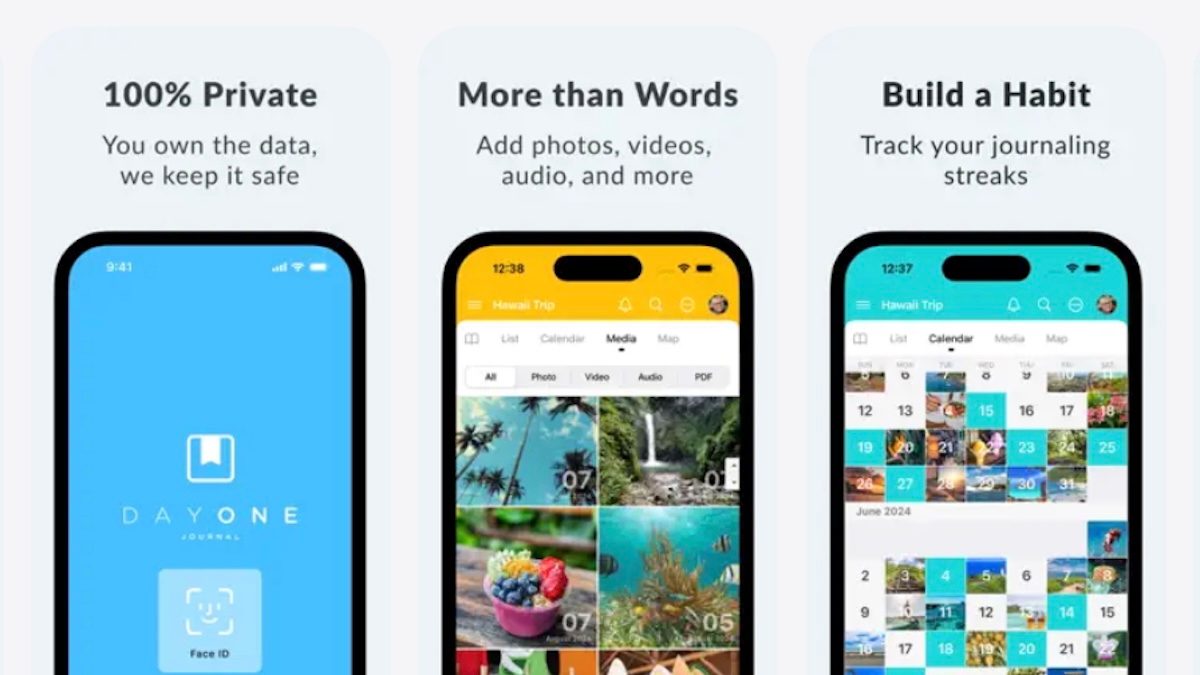
Photo courtesy of the App Store
Day One stays close to the traditional idea of freeform journaling while integrating prompts to help you get started. It also allows integration of pictures/videos, helps categorize journal entries, and prompts you to go back and reflect on past entries.
Launched in 2011, Day One has the benefit of having been through multiple iterations, making it especially feature-rich and user friendly.
Pricing:
Free with limited features; Premium $49.99/year
Key Features:
- Multimedia: Add photos, videos, audio, and voice-to-text transcription.
- Automatic context: Location, weather, and activity data are automatically tagged to entries.
- Template library: Pre-designed prompts help users overcome the “blank page” problem.
Rosebud
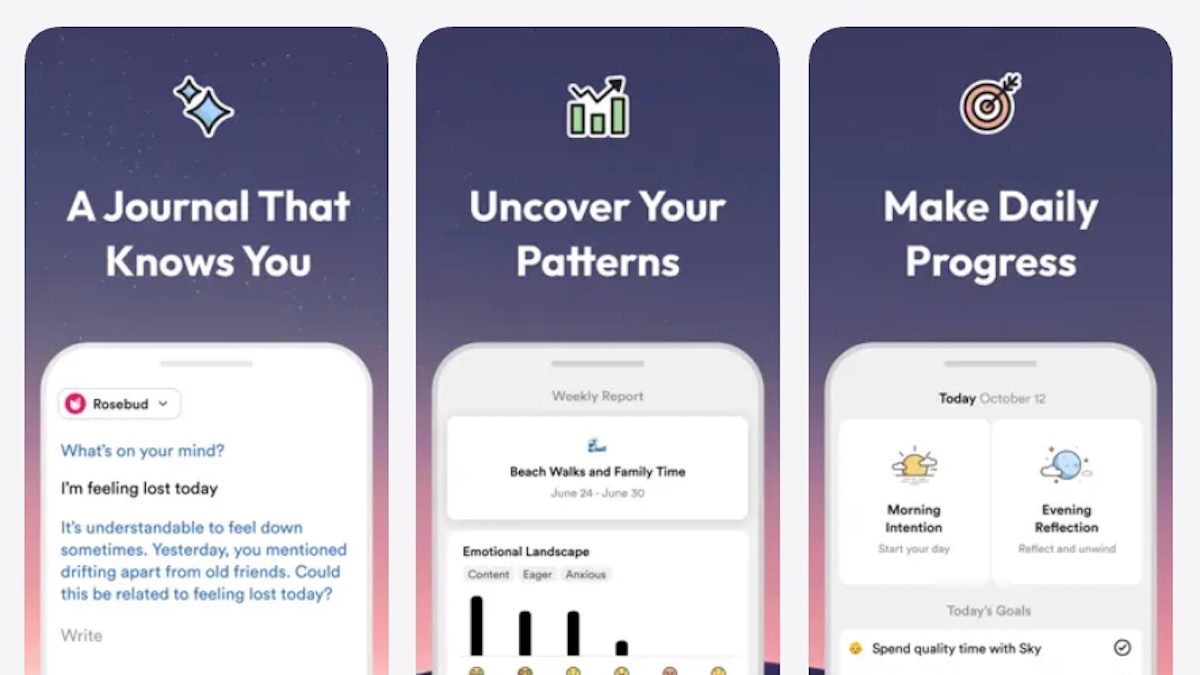
Photo courtesy of the App Store
Rosebud’s defining feature is that it uses AI to identify recurring themes in past entries and generate custom prompts to promote “deeper reflection” or “challenge you.” It also supports you in setting personal goals and building habits.
Many users report that Rosebud’s AI-generated prompts and insights are genuinely useful—like having a helpful guide alongside you as you journal. Others find prompts repetitive and note that hallucinations can be distracting.
Pricing:
Free basic features; Premium $12.99/month
Key Features:
- AI insights and prompts: Points out patterns and potential connections across entries. Surfaces thoughtful questions to keep you thinking.
- Weekly insights: Weekly reports highlight key themes, breakthroughs, and wins
- Goal tracking: Built-in goal tracking and habit formation tools
Mirror
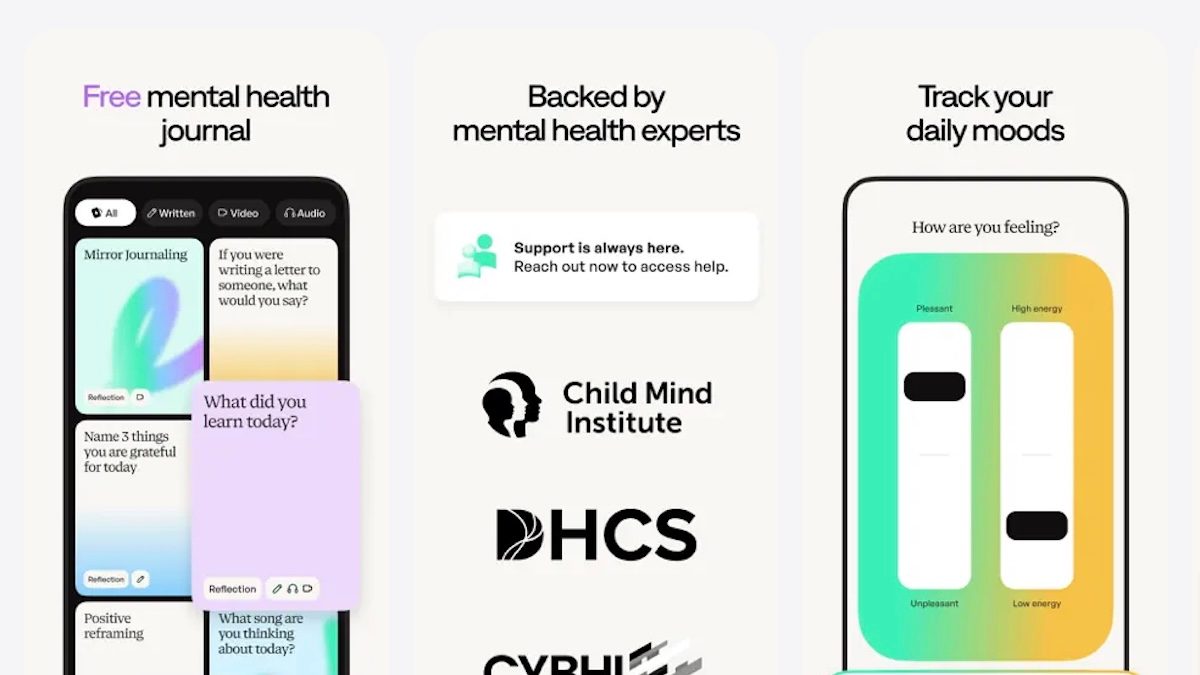
Photo courtesy of the App Store
Developed by mental health experts at the Child Mind Institute specifically for teens and young adults, Mirror uses mood check-ins as a launching point for focused journaling. It also helps address symptoms in real time by suggesting guided exercises (such as meditations) and connecting to crisis resources when necessary.
While it’s easy to start a written or audio journal entry, users can also quickly hit a record button and talk to their own reflection in the camera (hence the “mirror” name), which might be particularly appealing to some users.
Pricing:
Free
Key Features:
- Crisis Support: Provides an in-app Support Kit if a user expresses being in crisis or feeling suicidal
- AI-Powered “Remix”: Helps you reflect and see your entries in a new light, discovering cognitive frameworks that restructure themes
- Mood Visualization: Track emotional patterns over time with intuitive charts and insights
2. Mindfulness Apps
Maintaining a consistent mindfulness practice can be surprisingly difficult without having some tools at your disposal. Fortunately, there’s no shortage of apps competing to be your mindfulness trainer.
The Research on Mindfulness Apps
Research on mindfulness apps including this study on Headspace and this one on Calm provide a modest improvement in anxiety, stress, mood, and sleep quality. The effect size is less than consistently attending teacher-led meditation sessions, but their strength lies in their accessibility. These apps are easy to use, cost effective, and flexible, and the impact of them is higher when used consistently over a long period of time.
They’re best used to form a consistent meditation practice and to understand whether engaging in teacher-led practices would be something you’d find helpful. Generally, they’re a good gateway into developing a mindfulness practice and to see what impact it could have on your mood.
Insight Timer
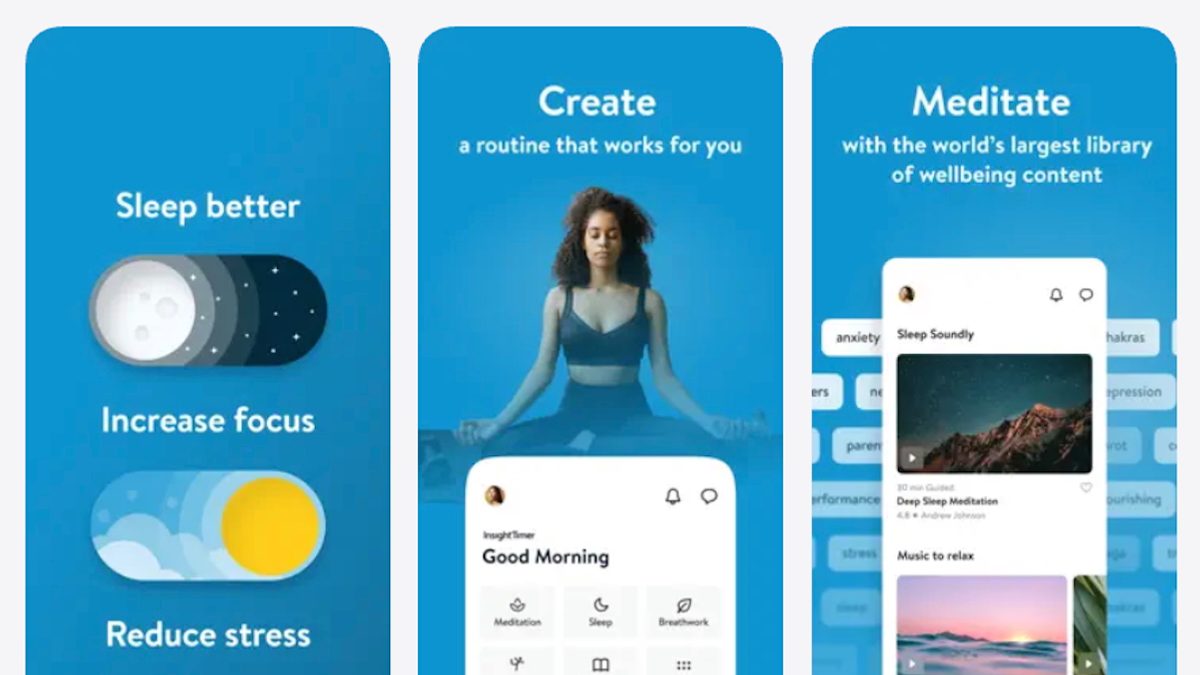
Photo courtesy of the App Store
Despite its name, the backbone of Insight Timer is really a massive library of meditations. To help make sense of where to start, you can give the app information on what you’re looking for, such as help with certain symptoms (stress, anxiety, insomnia, etc.), your experience with meditation, and the length of meditation that works best for you. You can also set goals for how often you want to meditate, save helpful meditations, and take live or asynchronous meditation courses.
Pricing:
Free with extensive library; Member Plus $59.99/year
Key Features:
- Exhaustive library: 300,000 Guided Meditations from psychologists, spiritual leaders and mindfulness teachers
- Customizable timer: This meditation timer is a crowd-favorite with ambient sounds and interval chimes
- Community: Interest-based groups, workshops, and live events.
Calm
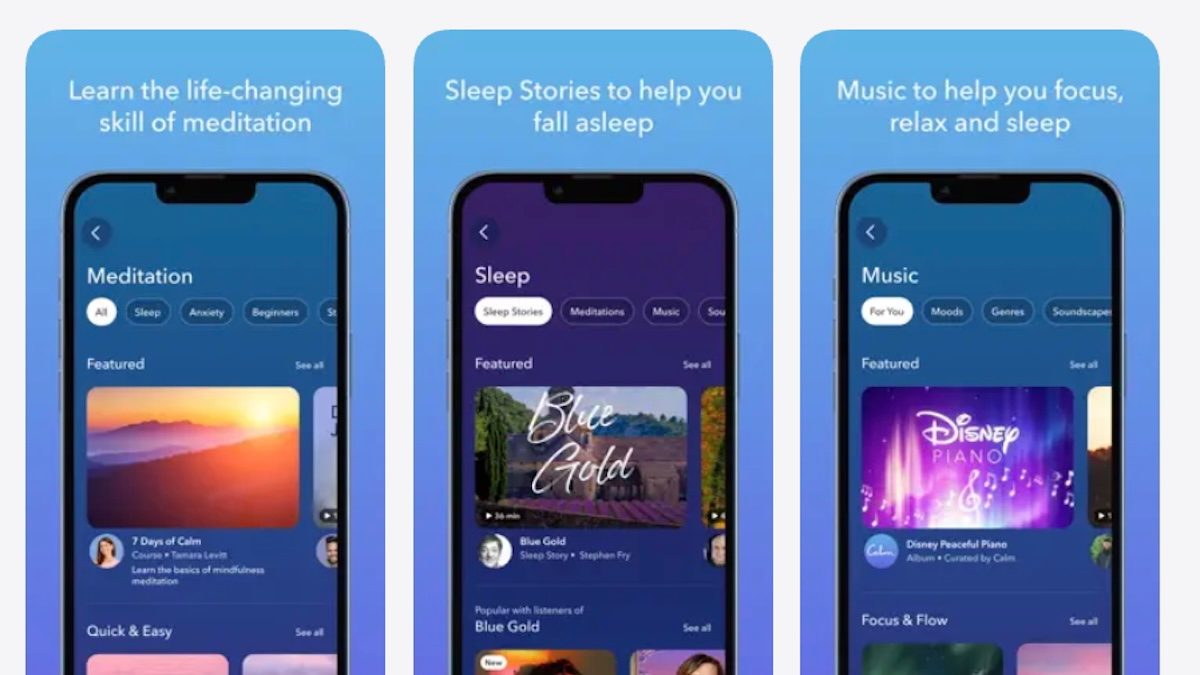
Photo courtesy of the App Store
Likely the most downloaded app on this list, Calm’s predominant focus is on helping with sleep, and it provides meditations and other exercises to help build healthy sleep habits. There’s also plenty of content for stress and anxiety mitigation as well as courses aimed at helping sustain long-term growth.
Pricing:
$79.99/year, $16.99/month; Lifetime subscription $399.99
Key Features:
- Star factor: Sleep stories narrated by familiar voices (Harry Styles, Matthew McConaughey)
- Daily programs: A range of teachers share inspiration and advice
- Master classes: Longer-form content from experts in psychology, mindfulness, and personal development
Headspace
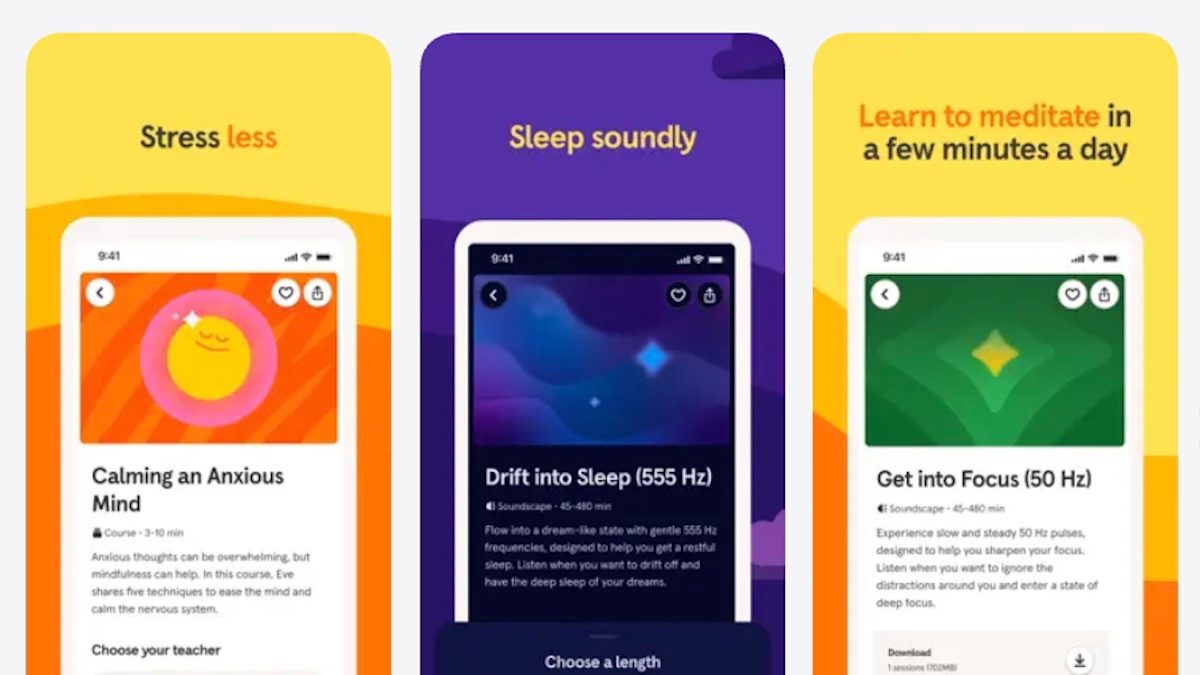
Photo courtesy of the App Store
Also popular, Headspace is best for people who are looking for grounded meditations that give specific guidance. It’s especially helpful for those learning to meditate and trying to figure out which mindfulness exercises are a good fit for them. Experienced meditators can also use the app to seek out specific types of meditations curated for their preferences.
Pricing:
$69.99/year, $12.99/month
Key Features:
- Structured learning: Courses build meditation skills systematically rather than offering random sessions
- Sleep-specific Tools: “Sleepcasts” are 45-minute audio recordings detailing tranquil settings
- Movement: Combines meditation with gentle yoga and movement practices
3. AI Chatbots for Mental Health
These remain controversial, but this guide wouldn’t be complete without discussing AI chatbots designed to support mental health. (General AI chatbots or “AI companions” are not included here, as they merit separate discussion.) There are dozens of mental health chatbots already on the market, and while they have many different slants, the primary goal is to provide emotional support by leveraging AI to respond and adapt based on the information you provide. They tend to be conversational and sometimes integrate exercises and habit tracking.
Below are just a few examples that depict different ways these mental health chatbots can function. All of these apps include warnings that errors and hallucinations occur, and that they cannot provide help in a crisis beyond sharing resources.
The Research on AI Chatbots for Mental Health
Research on chatbots has focused predominantly on how they can integrate with therapy rather than on their standalone efficacy. They are likely to be most effective when helping users engage in structured exercises grounded in evidence-based therapeutic approaches, such as CBT. When used in this manner, they carry a lot of similarities to the aforementioned dynamic journaling apps.
The overlap shows different forms of support leading to similar paths: structured intervention grounded in practical guidance to help you continue to work on yourself outside the therapy room. At this time, there is not sufficient unbiased research to meaningfully speak to whether chatbots can act as a replacement to therapy.
Ash by Slingshot AI
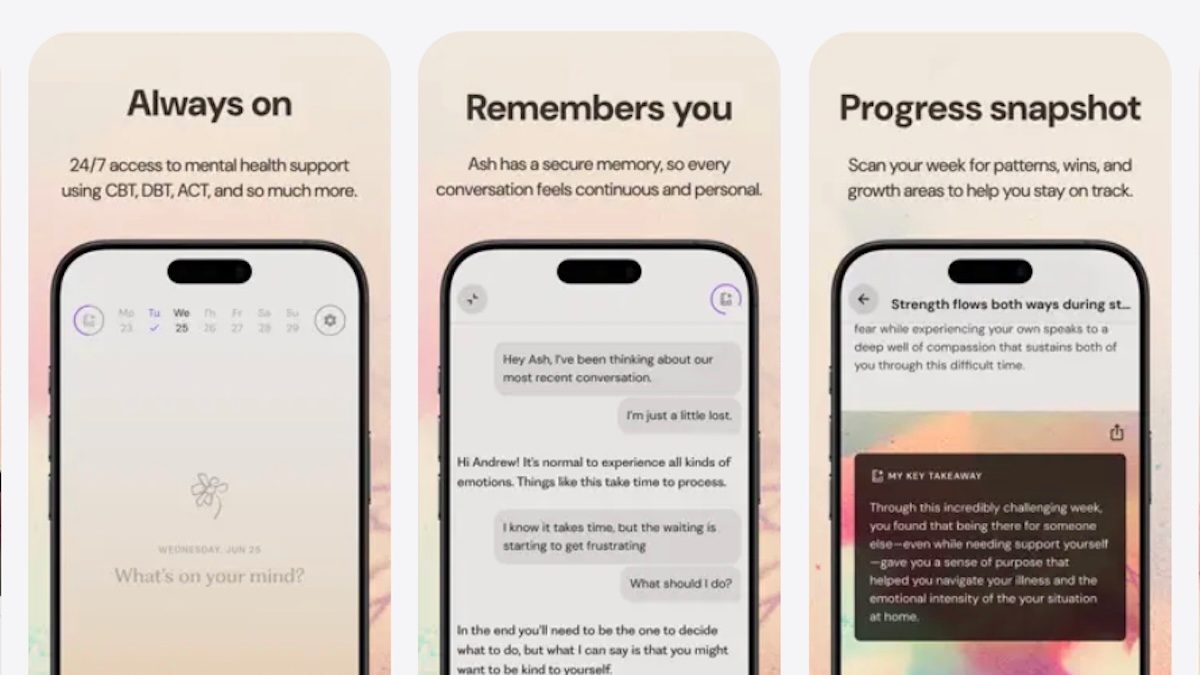
Photo courtesy of the App Store
Ash made a big marketing splash, branding itself “the first AI designed for therapy.” Ash’s emergence sparked debate about whether an AI could replace a therapist and what the emerging tech could mean for the future of the field. But what actually is Ash? Fundamentally, it’s a chatbot that uses your inputs and challenges to push you toward practical goals.
Pricing:
Currently free
Key features:
- Trained on real therapy sessions: AHS’s chatbot was trained on recordings of therapy sessions with licensed clinicians which ASH claims helps prevent problematic “people pleasing” responses.
- Supports habit building: With enough data, it can offer weekly insights and nudge you toward habit formation.
Wysa
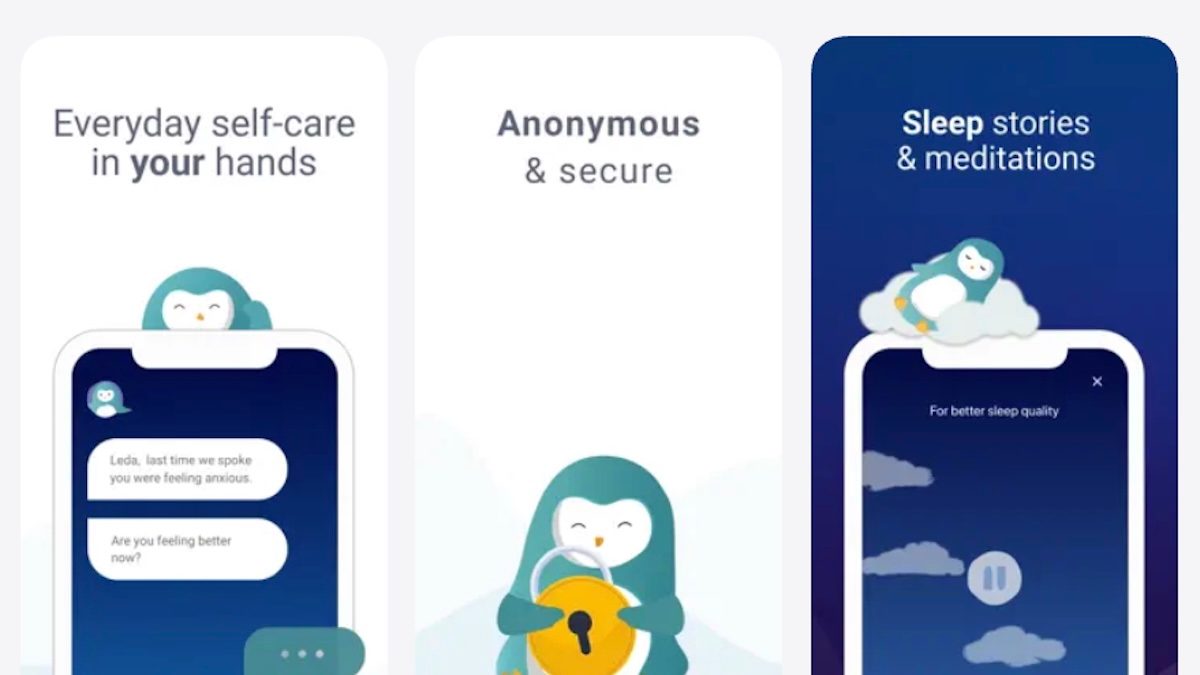
Photo courtesy of the App Store
With its supportive animated penguin guide, Wysa is teen-friendly but geared toward anyone struggling with low mood, stress, or anxiety. Wysa aims to guide users to appropriate exercises drawn from Cognitive Behavioral Therapy, Solution Focused Therapy, mindfulness practices, and other modalities.
Pricing:
Free version available; Premium $19.99/month; Optional human coaching at $19.99 per session
Key Features:
- Anonymity: No login or account is required.
- Text-based coaching: Wysa offers optional human support from mental health professionals.
Youper
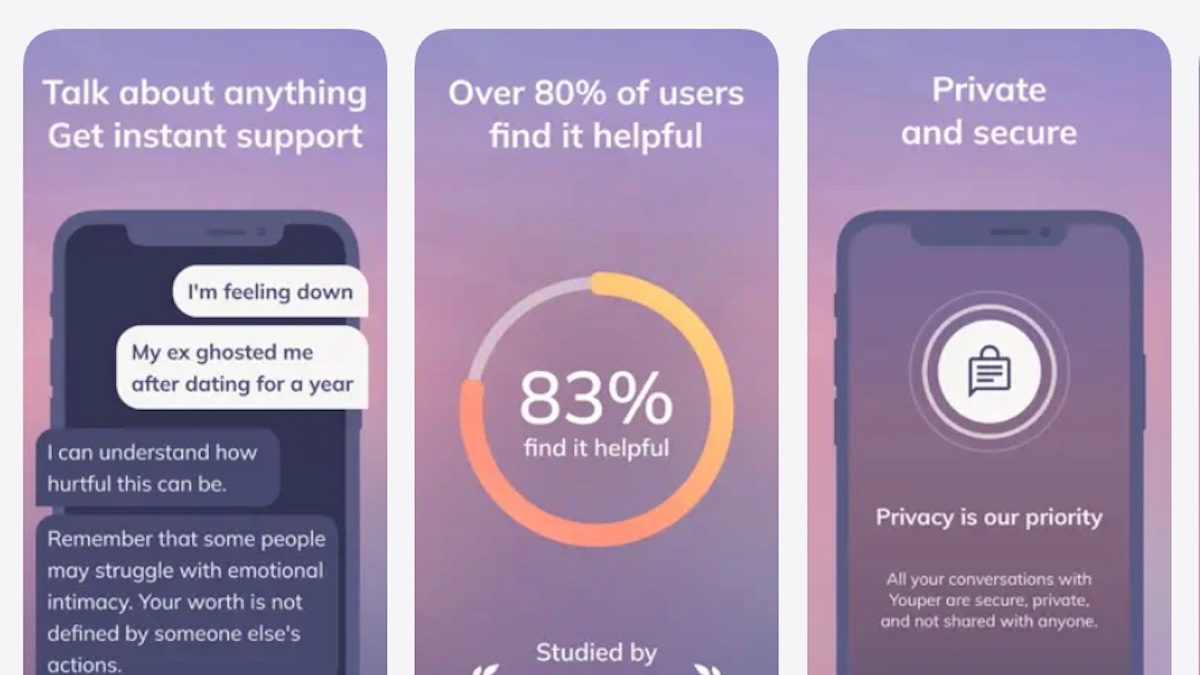
A more sophisticated “emotional health assistant,” Youper uses techniques from several evidence-based modalities to conduct daily check-ins and mood tracking, and can integrate a user’s physical health data (heart rate, sleep, activity) by connecting to their Fitbit or Apple HealthKit. After an initial assessment, Youper develops a user-specific plan targeting specific issues like anxiety, depression, sleep, or self-confidence, then adapts based on user patterns.
Pricing:
$69.99/year
Key Features:
- Personalized plans: Interventions are structured and goal oriented.
- Connects to wearables: Integrates data from fitness trackers and Apple Healthkit.
4. Virtual Reality
Despite getting a bit drowned out by AI, virtual reality (VR) remains a big player in the mental health field. The main uses for VR at this time are exposure therapy and grounding. Additionally, some are only for use within a therapy session while others are for personal use.
Below are some VR options broken down by what they support and what setting to use them in.
The Research on Virtual Reality for Mental Health
The research on VR is interesting in its specificity. While the effect sizes are substantial, VR has been predominantly used to help with exposure therapy and grounding for specific phobias, OCD, and PTSD. This provides a stark contrast to some of the other tools that focus on providing incremental benefits for mood, stress, and anxiety.
Newer research is looking into the potential for VR to help with stress reduction and emotional regulation. While VR may not apply to a wide breadth of clients, it has considerable potential to help subsets of people that are struggling with severe conditions and symptomology. Additionally, the increased interest in research for overall functioning provides reasons for optimism around broader VR use in the near future.
OVRcome
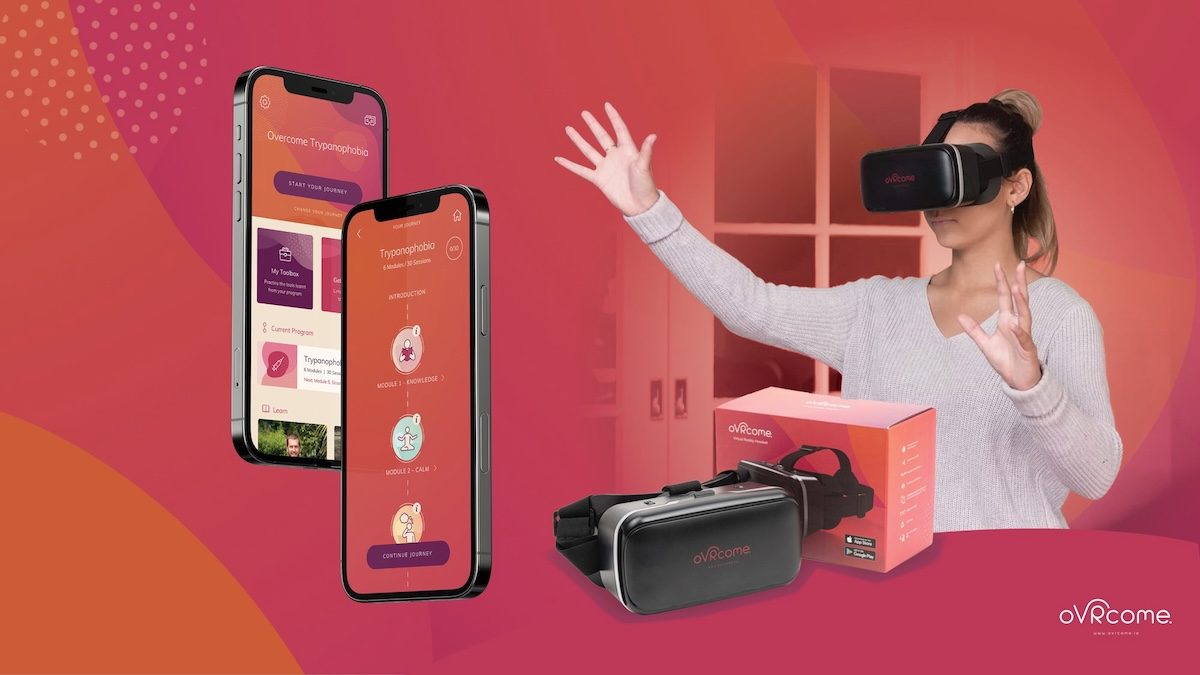
Photo courtesy of OVRcome
OVRcome is a VR therapy platform that can be used by clients on their own or in conjunction with their therapist to address phobias and anxiety. It offers a large library of virtual reality environments and experiences across 20 conditions.
Pricing: For client-only programs, the VR headset is $49+shipping and the monthly subscriptions fee starts at $19/month. Clinical use is currently free, but the company has plans to transition to tiered pricing.
Key Features:
- Multiple programs: Including social anxiety and fear of needles, flying, heights, public speaking, dogs, or spiders
- Psychoeducation: 2.5 hour psychoeducation program split into 6 modules that teach coping skills before VR exposure
- Progress tracking: Records a user’s anxiety rating using a subjective units of distress scale (SUDS)
Virtually Better
Designed for in-office use by clinicians, Virtually Better is not available to consumers. The primary focus is VR for PTSD and its programs are often used to treat members of the military. Additional programs aim to support therapists in treating addictions, phobias, and social anxiety.
Pricing:
Cost of leasing the software and hardware varies based on setting and use case
Key Features:
- Condition-specific scenarios: For each treatment area, clinicians can guide clients through a simulated experience
- Customization: Clinicians can adjust certain sensory aspects of each scenario (for example, turning various sound elements up or down or changing the weather from calm to stormy)
- Clinician training: Therapists can take introductory Virtual Therapy Exposure and Prolonged Exposure Therapy training through Virtually Better (both are eligible for CE credits).
XRHealth

Photo courtesy of XRHealth
XRHealth is used within therapy for exposure and grounding to help treat a range of mental health conditions including PTSD, trauma, phobias, anxiety, addiction, and OCD. Clients interested in using XRHealth to manage symptoms must see one of their trained and contracted providers.
Pricing:
Covered by insurance or $99–$150/visit out-of-pocket
Key features:
- AI-powered customization: Clinicians can generate spaces tailored to clients needs
- Treatment guidance: Get targeted suggestions for ideal VR environments for specific conditions
- Insight reports: Reports surface insights drawn from VR session data
Soundself
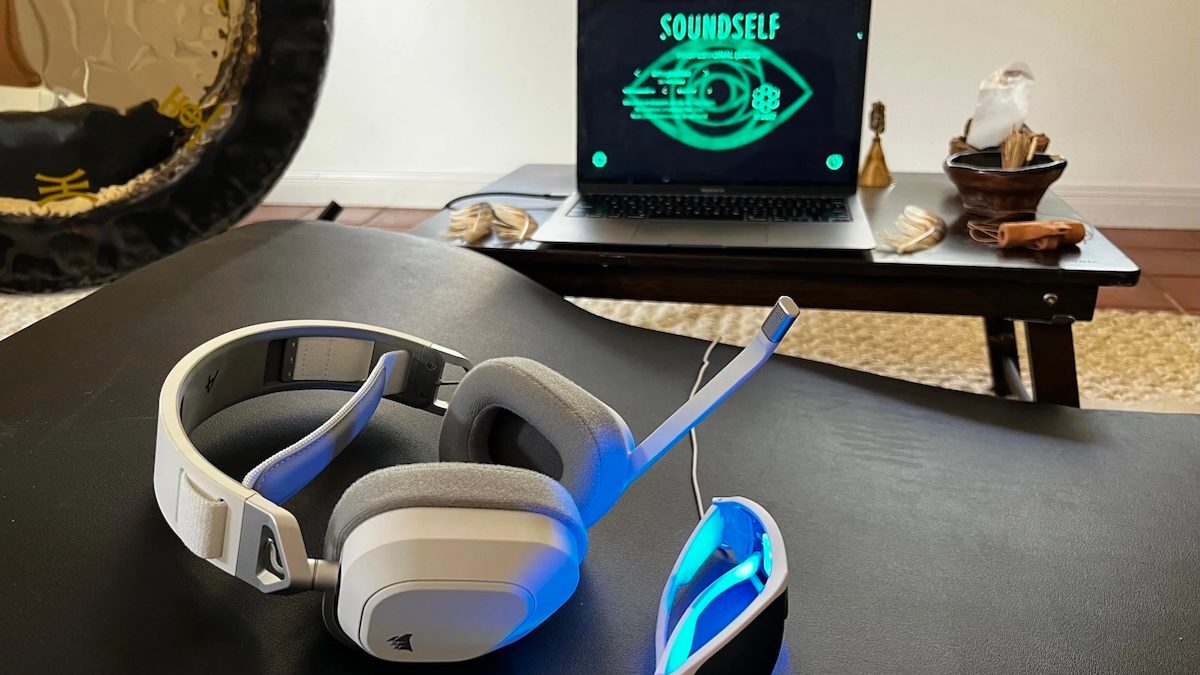
Photo courtesy of Soundself
Soundself uses VR technology to provide a psychedelic experience, aka a “technodelic.” It combines the user’s own vocal tones with strobing LED light patterns and generative music to create novel sensory experiences that can reduce stress and enhance mood. It’s typically used as an adjunct to ketamine-assisted therapy to treat depression and anxiety, but can also be used as a standalone, drug-free treatment.
Pricing:
The foundational system costs $3,000
Key features:
- An entry point or alternative to ketamine therapy: Soundself can be used to help prepare clients for a deeper, drug-induced psychedelic journey or as a drug-free alternative.
- Controlled duration: Sessions can last between 15 to 40 minutes.
- Portable system: The software can run on your own computer and requires only headphones and light glasses.
5. AI Clinical Note Takers
Not for consumers, AI note taking tools for therapists are specifically for helping mental health clinicians save time on documentation. They are HIPAA compliant tools that run during therapy sessions and produce the first draft of a note. One of the most helpful aspects of a note taking tool is that it can help providers generate structured and complete notes that meet insurance compliance guidelines.
What to Keep in Mind
It’s important for clinicians to read each note and edit it as necessary. Additionally, ensuring the notes comply with up-to-date insurance standards can decrease the risk of audits and/or insurance clawbacks. If a clinician is interested in using such a tool, it’s important to clearly explain their use to the client and to ask the client if they consent.
There are many options out there for providers and most have similar interfaces, which don’t lend themselves to flashy product shots. Below are just a few examples.
Berries
Berries generates a note with suggested ICD-10 codes as well some extras, including suggested treatment plans, patient instructions, and summaries to “prep” the provider for the next session. Users will need to manually copy Berries notes into their EHR.
Pricing: Basic features are free for up to 10 session/month; $79/month for unlimited sessions
Blueprint
Blueprint rapidly generates progress notes optimized for compliance. It also offers helpful support for treatment planning.
Pricing: $29/month with session-based scaling starting at $0.49/session
Note Assist
What sets Note Assist apart is its integration within Alma, a comprehensive private practice management platform, which eliminates the need to pay for and switch between platforms.
Pricing: Note Assist is one of several features and services included in Alma membership ($125/month)
Upheal
Upheal captures sessions and produces unlimited free AI-generated notes. A paid subscription provides access to additional features. What stands out as unique are its session analytics that track factors like talking ratios and conversation dynamics to help determine progress.
Pricing: Free note generator; $19-$69/month
Making Technology Work for You
The explosion of mental health tech has opened new ways to care for ourselves and address our mental health needs. These tools can make mental healthcare more accessible and flexible than ever before; however, more options don’t always mean better outcomes. The best way to harness this tech is to thoughtfully consider what’s likely to work for you and to check in with yourself as you engage with it.
Think of mental health tech as a toolbox to enhance the work you do in the therapy room. When used with intention, they can help you practice new skills, notice patterns, and stay connected to your intentions.
References
Carl, E., Stein, A. T., Levihn-Coon, A., et al. (2019). Virtual reality exposure therapy for anxiety and related disorders: A meta-analysis of randomized controlled trials. Journal of Anxiety Disorders, 61, 27-36. https://doi.org/10.1016/j.janxdis.2018.08.003
Economides, M., Martman, J., Bell, M.J. et al. (2018) Improvements in Stress, Affect, and Irritability Following Brief Use of a Mindfulness-based Smartphone App: A Randomized Controlled Trial. Mindfulness 9, 1584–1593 (2018). https://doi.org/10.1007/s12671-018-0905-4
Fulmer, R., Joerin, A., Gentile, B., et al. (2018). Using psychological artificial intelligence (Tess) to relieve symptoms of depression and anxiety: Randomized controlled trial. JMIR Mental Health, 5(4), e64. https://doi.org/10.2196/mental.9782
Huberty, J., Green, J., Glissmann, C., et al. (2019). Efficacy of the mindfulness meditation mobile app "Calm" to reduce stress among college students: Randomized controlled trial. JMIR mHealth and uHealth, 7(6), e14273. https://doi.org/10.2196/14273
Khoury, B., Knäuper, B., Schuman-Olivier, Z., et al. (2018). Mindfulness-based stress reduction for healthy individuals: A meta-analysis. Journal of Health Psychology, 23(6), 725-735. https://doi.org/10.1007/s12671-018-0905-4
Lattie, E. G., Adkins, E. C., Winquist, N., et al. (2019). Digital mental health interventions for depression, anxiety, and enhancement of psychological well-being among college students: systematic review. Journal of Medical Internet Research, 21(7), e12869. https://doi.org/10.2196/12869
Maples-Keller, J. L., Bunnell, B. E., Kim, S. J., et al .(2017). The Use of Virtual Reality Technology in the Treatment of Anxiety and Other Psychiatric Disorders. Harvard review of psychiatry, 25(3), 103–113. https://doi.org/10.1097/HRP.0000000000000138
Nicholas, J., Larsen, M. E., Proudfoot, J., & Christensen, H. (2015). Mobile apps for bipolar disorder: a systematic review of features and content quality. Journal of Medical Internet Research, 17(8), e198. https://doi.org/10.2196/jmir.4581
Philippe, T. J., Sikder, N., Jackson, A., Koblanski, M. E., Liow, E., Pilarinos, A., & Vasarhelyi, K. (2022). Digital health interventions for delivery of mental health care: systematic and comprehensive meta-review. JMIR Mental Health, 9(5), e35159. https://doi.org/10.2196/35159
Tremain, H., McEnery, C., Fletcher, K., et al. (2020). The therapeutic alliance in digital mental health interventions for serious mental illnesses: narrative review. JMIR Mental Health, 7(8), e17204. https://doi.org/10.2196/17204
Vaidyam A.N., Wisniewski H., Halamka J.D., et al. (2019) Chatbots and Conversational Agents in Mental Health: A Review of the Psychiatric Landscape. The Canadian Journal of Psychiatry. 2019;64(7):456-464. doi:10.1177/0706743719828977
Yin, H., Zhu, H., Gu, J., et al. (2024). Mobile-based ecological momentary assessment and intervention: bibliometric analysis. Frontiers in Psychiatry, 15, 1300739. https://doi.org/10.3389/fpsyt.2024.1300739

Written by
Daniel Fleshner, LPC, LCPC
Learn More
Build a thriving private practice with Alma
We believe that when clinicians have the support they need, mental health care gets better for everyone.