Tools & Guides
What is Clinical Documentation and Why Does It Matter?


Maintaining documentation — in the form of a comprehensive clinical record for each client — is required by law, ethics codes, licensure boards, and insurance payers. Beyond these requirements, it also has immense clinical value. Proper documentation facilitates communication, coordination, and continuity of care. It also promotes the efficiency and effectiveness of treatment.
Meeting the specific documentation compliance standards set by insurance payers helps ensure that you are paid appropriately for your work and reduces the risk of being audited and/or experiencing claim denials.
If you are audited or subject to a clinical review by an insurance payer, documentation is your best defense. Think of it as the 'Golden Thread' — the clear, logical link that connects your client's diagnosis to your treatment plan and every intervention you provide. This thread or narrative is what demonstrates Medical Necessity that insurance payers require to reimburse you for your sessions.
6 Types of clinical documentation
When it comes to clinical documentation, not all notes serve the same purpose. Each type of note has a distinct role, audience, and level of confidentiality. Understanding the differences between these types of notes is essential for effective clinical practice and ethical record-keeping.
1. Initial Intake Notes
Intake notes document the foundational information gathered during a client's first session or initial assessment. They establish a clinical baseline and inform the direction of treatment.
Intake notes:
- Capture a client's presenting concerns, relevant personal and family history, current symptoms, and psychosocial background
- Are used to inform diagnosis, establish medical necessity, and develop the initial treatment plan
- Are part of the client's permanent clinical record and can be audited
- Are required by most insurance companies as a condition of reimbursement and must meet documentation standards set by licensing boards and ethics codes
2. Progress Notes
Progress notes include the facts of the session: session start and stop times, modalities utilized, diagnosis, symptom and functional status, treatment plan, and progress/prognosis.
Progress notes:
- Form a record of a client's assessment, diagnosis, treatment, and progress while under a provider’s care and are required by insurance companies
- Are required by law, ethics codes, and licensing boards
- Can be audited
3. Psychotherapy Notes
Psychotherapy notes include personal notes that document or analyze the contents of a conversation during a private counseling session that are separate from the rest of the individual’s medical record.
Psychotherapy notes:
- Are protected by extra confidentiality under HIPAA and are not included if a client’s medical chart needs to be sent elsewhere
- Should be filed in a different location from the client’s chart. They must be stored separately (physically or electronically) from the rest of the client's designated record set to retain their special HIPAA protection
- Are not required
- Cannot be audited: if an insurance company requests notes, you are only required to share your psychotherapy notes if they are subpoenaed by the court
4. Chart Notes
Chart notes include broader, contextual information about a client, such as non-scheduled phone calls or text messages, and medication history.
Chart notes:
- Are not tied to a client’s appointment
- Are not required
- Can be audited because they are part of a client’s clinical record
5. Treatment Plans
A treatment plan provides a structured roadmap for a client’s care. It outlines the clients goals, issues addressed, therapeutic interventions to be used, and measurable objectives for progress.
Treatment plans are required by state laws and ethics codes, and can generally be broken down into the following five categories:
- Problem statements
- Goals
- Objectives
- Interventions
- General checklist
If you’re an Alma member, you can create treatment plans using our default template or the Wiley Treatment Planners included in your membership. Wiley Treatment Planners is a virtual library of research-backed, prewritten presenting problems, treatment goals, objectives, and interventions that target specific diagnoses.
6. Discharge Plan / Termination Summary
Documentation of ongoing discharge planning should also be included in progress notes, beginning at the initiation of treatment. Discharge planning includes the following elements:
- Criteria for discharge
- Identification of barriers to completion of treatment and interventions to address those barriers
- Identification of support systems or lack of support systems
A termination summary is completed at the end of the treatment episode, when a client is discharged, and includes the following elements:
- Reason for a treatment episode
- Summary of the treatment goals that were achieved or reasons the goals were not achieved
- Specific follow-up activities/aftercare plan
Documentation for insured vs. private-pay clients
When an insurance company pays for any part of a client’s session, they have the right to request records or a summary of progress notes — whether for utilization review or quality management and providers are contractually obligated to share this information.
These notes provide essential information for insurance payers as they determine if a claim will be reimbursed or denied. Payers require medical necessity to be demonstrated in these forms of documentation to confirm that the level of care matches the client's needs, ensure that delivered care is based on evidence-based approaches to treatment, and prevent insurance fraud.
Documentation is equally important for private-pay clients. An insurance company can still request this information from you if a client submits a Superbill to their insurance in order to be reimbursed for any part of their mental health care. As a rule, aim to maintain the same level of documentation for both insured and private pay clients.
How to communicate with clients about documentation
It’s best to communicate clearly to clients that insurance companies may request this type of information — and obtain all necessary consents from clients through your client intake paperwork, including your notice of privacy practices.
Include the information below in your clients’ intake paperwork to let them know of the following possibilities:
- Insurance companies may request therapy records
- A mental health diagnosis is typically required for insurance coverage
- Insurance companies may ask providers about clients’ progress and updates
Sharing documentation with clients
A client may request to view, and has the legal right to receive, the progress notes for their sessions, as this is part of their individual medical records.
Under HIPAA regulations, providers are not required to share their full progress notes with their clients. Under HIPAA, you have the clinical discretion to withhold notes if you believe sharing them would result in substantial harm to the client or another person. In these sensitive cases, providing a Treatment Summary (including diagnosis, goals, and progress) often satisfies the client’s request while protecting the therapeutic process.
Making clinical documentation audit-resilient
To make your notes audit-resilient, focus on documenting Functional Impairment. For example, instead of just noting “client is depressed,” document how that depression prevents them from performing at work or maintaining self-care. This specific 'why' is what justifies your reimbursement.
Maintaining clinical documentation that meets compliance standards set by payers helps ensure that you are paid appropriately for your work and reduces the risk of an unfavorable outcome in the face of an audit or claim denials.
Below are five of the most common questions therapists ask about compliant documentation.
1. What steps should I be taking to ensure I meet compliance standards?
It’s ultimately best to follow the documentation requirements laid out by the insurance payer you are contracted with. Payer documentation requirements are included in the manuals provided to you upon being credentialed.
Understanding these payer requirements can be an overwhelming task, however. If you’re an Alma member, you can use our enhanced progress note template to help you meet insurance requirements with less effort and improve the quality of your notes.
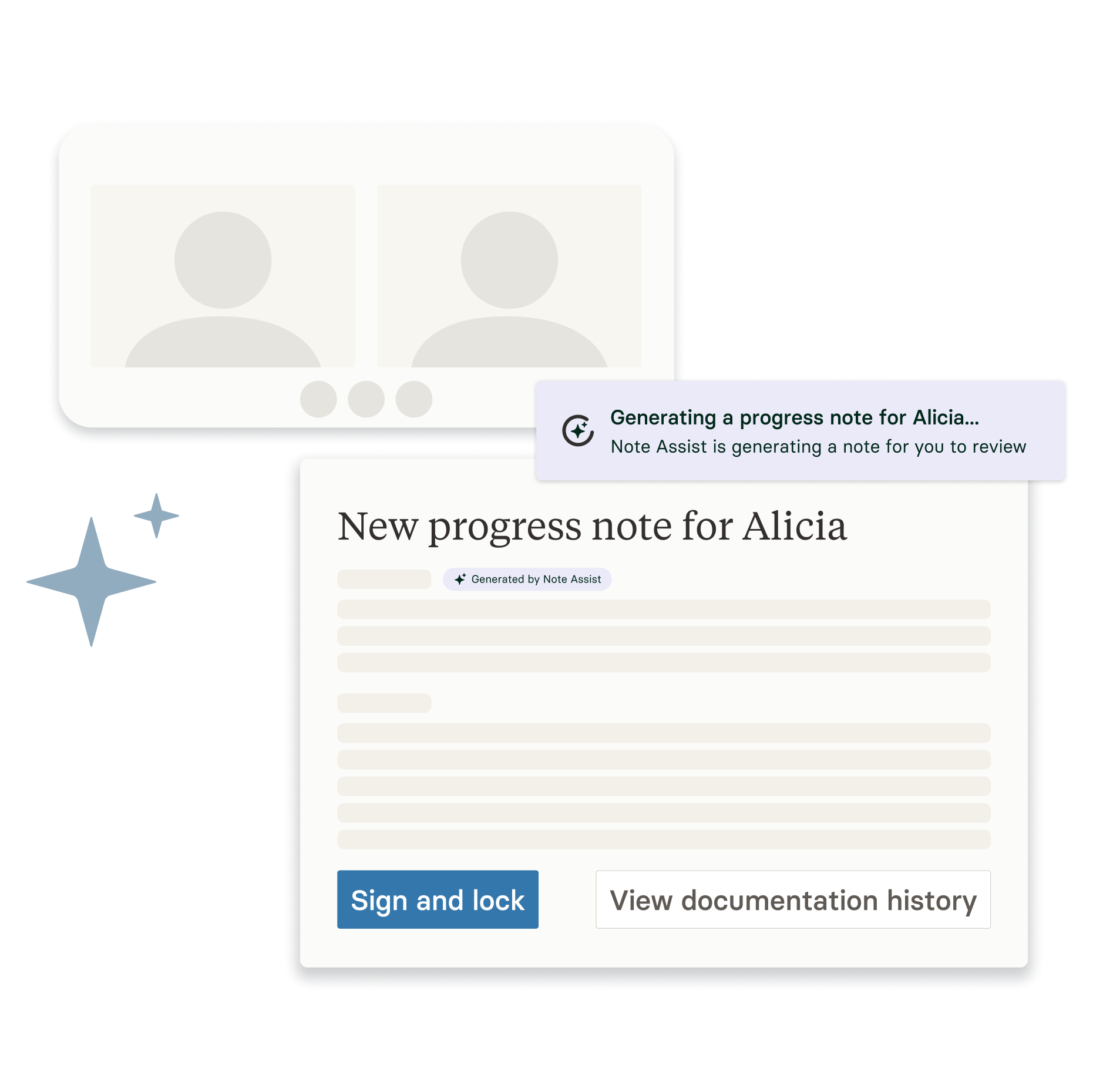
Alma has worked with compliance professionals to develop Note Assist, a free AI-powered note-taking tool designed around a compliant note template. Many providers use it to help ensure their notes align with best practices.
2. What should be included in a compliant progress note?
To make sure you’re creating comprehensive and compliant notes, download Alma’s Compliant Progress Note Cheatsheet. Including all elements of this checklist in your notes does not guarantee that your records will not be audited; however, doing so provides insurance companies with the information they typically require in clinical documentation, allowing you to more successfully navigate audits should they occur.
3. What does “medical necessity” mean?
Insurance companies require that the care provided to a client is necessary, appropriate, and based on their diagnosis, symptom acuity, and level of functioning. The care a client receives must also be based on evidence-based approaches to treatment. A service is “medically necessary” when:
- It is reasonable and necessary to protect life
- It prevents illness or disability
- It alleviates pain
Medical necessity should be addressed in the body of your treatment plans and progress notes, as payers use medical necessity as a benchmark to determine whether to reimburse a claim. Get more detailed information about medical necessity here.
4. What does it mean if my documentation is audited?
Audits are not unusual. They can happen for a number of reasons and may be a result of the following:
- Submitting a high daily claims count (e.g., more than 480 minutes of service per day)
- Overuse of crisis CPT codes (90839/90840)
- Frequent use of CPT code 90837 in the absence of documented medical necessity based on the acuity of client symptoms and/or requirements of treatment modality provided
- Using an adjustment code diagnosis for more than 6 months
- Frequent/extensive billing of NOS diagnosis codes
- Billing for codes not covered under your licensure
- Billing for more than one session per week in the absence of documented medical necessity based on the acuity of client symptoms, and/or approval from the insurance company for more frequent sessions
- Overuse of the 90785 interactive complexity code
- Billing for a time-based code that does not match the time documented in the session
- Lack of notes produced for a session upon request, or lack of response to a notes request within five business days.
To learn more, visit How to Prevent and Prepare for Audits.
5. What should I do if I want to appeal an audit?
To initiate an appeal, you will need to reach out to the insurance payer directly. Please keep in mind that appeals must be submitted within 180 calendar days from the date you received the denial from the insurance payer. Any appeals received outside of this timeframe will not be processed.
You may need to have the following information available in order to begin the appeal process:
- Relevant medical records and any supporting documentation pertaining to the session
- Prior authorization documentation, if applicable
- An explanation/cover letter stating the reason for the appeal
Take action:
Alma is your partner in compliance
One of many benefits of being an Alma member is gaining access to innovative, in-the-moment support to help you create compliant documentation. We’ll also keep you updated on compliance changes so you can stay informed.
Disclaimer
This article is for informational purposes only, and is not intended as, and should not be relied upon as, legal, financial, medical, or consulting advice. It is ultimately your responsibility as a provider to maintain accurate and correct records for your services, and to ensure compliance with any applicable regulations. If you have questions or concerns, you should seek appropriate legal, financial, medical, and consulting advice.


Written by
Alma Staff





Learn More
Build a thriving private practice with Alma
We believe that when clinicians have the support they need, mental health care gets better for everyone.