
Managing Seasonal Affective Disorder as Winter Peaks: New Research & Strategies
Exhausted and doing less of what you love? It could be SAD—get the latest tell-tale symptoms and strategies for feeling better.
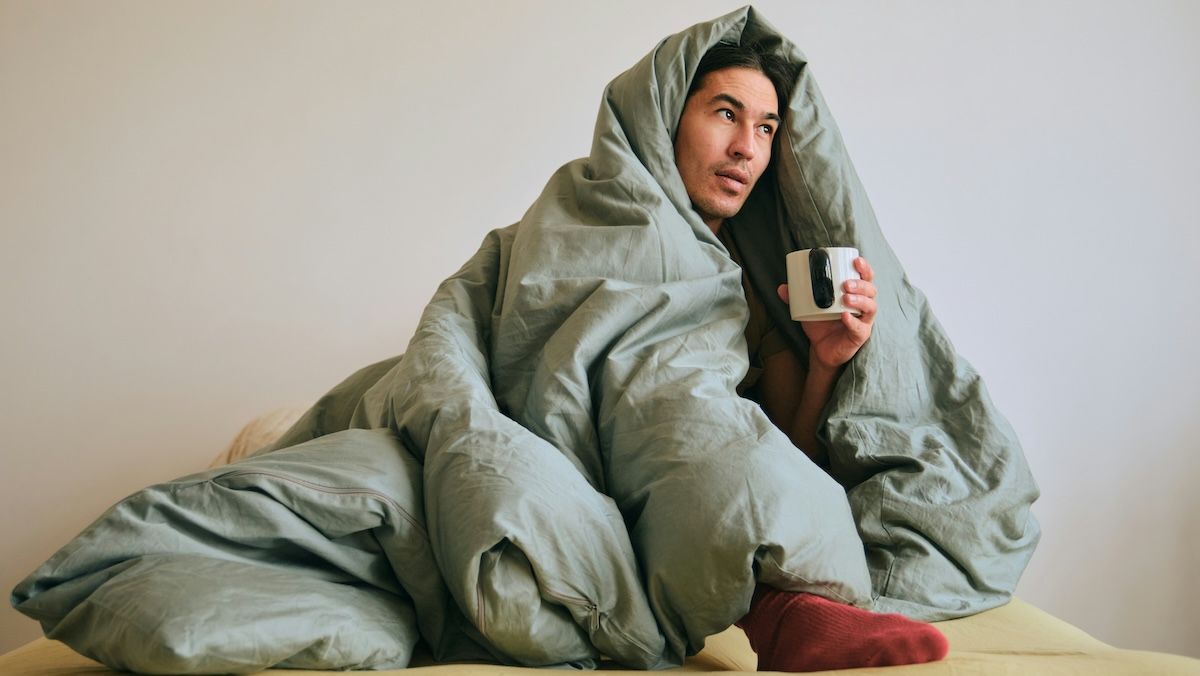
If you're reading this while slumped in a chair (or still in bed), exhausted despite sleeping 9+ hours, and contemplating whether hibernation is a viable life choice, you're clearly struggling to get through winter. Depending on when you started feeling low, you might be wondering: Could this be seasonal affective disorder (SAD)?
Not just the “winter blues,” SAD is a subtype of major depressive disorder affecting millions of Americans (NIMH, 2023). Women are diagnosed more frequently than men and SAD is most common in people aged 20-30, though it can appear at any age (Dustman, 2020; NIMH, 2023).
When you’re feeling the weight of shorter, darker days, it’s easy to convince yourself that you can “power through until spring,” but a smarter strategy is to watch for the unique symptoms of SAD and learn how to manage them—because the one bright spot of this gloomy condition is that it can be treated.
Signs of seasonal affective disorder (what to watch for)
One of the reasons that SAD is hard to recognize is that its symptoms overlap with those of major depression. Both SAD and depression are associated with:
- Persistent sadness
- Loss of interest in activities
- Difficulty concentrating
- Feelings of hopelessness
That said, SAD has some particularly prominent features. If you have seasonal affective disorder, you’re even more likely to experience:
- Intense carbohydrate cravings
- Excessive sleeping (hypersomnia)
- Weight gain
- Lethargy
- Social withdrawal
It's the seasonal pattern combined with these specific “hibernation-like” features above that distinguish SAD from other forms of depression (APA, 2022; Dustman, 2020; NIMH, 2023).
New insight into what causes seasonal affective disorder
Lack of sunlight changes brain chemistry
Recent studies have given us clearer answers about what's happening when winter hits. Research shows that sunlight directly affects how much serotonin your brain produces (NIMH, 2023), so when daylight decreases, your body's internal systems go haywire.
The hypothalamus—which controls your circadian rhythms—gets disrupted by lack of sunlight. This leads to overproduction of melatonin, making you feel like you could sleep through anything, plus reduced serotonin levels, the chemical that helps regulate your mood (LeWine, 2024; NIMH, 2023).
Doing less can negatively impact mental health
If you do have SAD, you're probably missing out on activities you used to enjoy. Maybe it's those Tuesday evening walks that used to clear your head, maybe it's weekend hikes, outdoor coffee dates, or just sitting in your backyard with a book. When it's dark at 4:30 p.m. and freezing outside, those things don't just get harder to do, they may become impossible.
Researchers are coming to realize that missing your favorite activities may be a key contributor to SAD, not just a symptom of it (Richardson, 2025). This matters because it points toward solutions. Cognitive-behavioral therapy for SAD specifically focuses on helping you discover new activities that provide enjoyment and purpose during darker months (Berg, 2025; Richardson, 2025).
The holidays can contribute to SAD
From Thanksgiving through Valentine's Day, you may be navigating societal expectations, family dynamics, and cultural pressure to be “merry and bright” when you feel anything but. No surprise, research shows that not everyone feels cheerful during the holidays (Richardson, 2025).
The cultural narrative that everyone should be joyful, grateful, and surrounded by loving family can make SAD symptoms feel even more isolating. If your family is distant—either geographically or emotionally—or if you're navigating family rejection, perhaps because of your identity, the holiday season can amplify everything SAD already makes you feel: the loneliness, the sense of being on the outside looking in, the grief.
Speaking of grief: if you've lost someone important, winter holidays can turn that loss into a recurring wound. The decorations, music, and get-togethers can become reminders of absence.
While grief and SAD can occur simultaneously and compound each other, it's important to understand they're clinically distinct conditions. SAD's diagnostic criteria require that depressive episodes follow a seasonal pattern independent of seasonal stressors or anniversary reactions to losses (APA, 2022; NIMH, 2023). In other words, if your winter depression is primarily tied to the anniversary of losing someone during that season, that's grief rather than SAD; although both can certainly coexist and intensify each other.
Feeling like you may be in crises? Call NAMI's information line (1-800-242-6264, option 4) or the 988 Suicide & Crisis Lifeline. They're available 24/7, and available to everyone.
Does light therapy help with SAD?
While moving your body can certainly aid in elevating mood, multiple studies have analyzed what treatments work best for SAD and it appears that research strongly supports bright light therapy as a first-line, effective treatment (Chen et al., 2024; Wan et al., 2025).
Essentially, bright light therapy mimics the missing sunlight and helps your brain produce the right balance of mood-regulating and sleep-regulating chemicals, alleviating SAD symptoms in many consistent users (LeWine, 2024; Wan et al., 2025).
Recent research is illuminating the fact that bright light therapy's effectiveness extends beyond SAD, making it a valuable option for non-seasonal depressive symptoms (APA, 2025).
7 Ways to cope with SAD as winter peaks
Based on scientific evidence, here are 7 strategies that can help you feel better:
1. Start with light therapy: Use a 10,000 lux white light box for 30 minutes daily, before 10 a.m., positioned about a foot away (LeWine, 2024; Wan et al., 2025). Next year, set a reminder to begin light therapy in early fall, before symptoms show up.
2. Move your body: Exercise and outdoor time during daylight hours both appear beneficial (Rothenberg et al., 2024). A free online workout series or morning walks can get you started.
3. Eat strategically: Focus on proteins and high-fiber foods that boost serotonin (Briick, 2025).
4. Check vitamin D: Get your levels tested and, if deficient, supplement with a doctor-recommended dose (Berg, 2025; NIMH, 2023).
5. Stay connected: Maintain social activities even when you want to cancel everything (Rothenberg et al., 2024).
6. Consider therapy: Cognitive-behavioral therapy can help identify meaningful activities and develop coping strategies (APA, 2022; Berg, 2025; Richardson, 2025).
7. Use medication if needed: Antidepressants, particularly bupropion (Wellbutrin) and SSRIs, can be effective when other interventions aren't enough (LeWine, 2024; NIMH, 2023).
Dealing with SAD symptoms is easier with professional help
To be formally diagnosed with SAD, symptoms must coincide with fall/winter for at least two consecutive years, with full remission during other seasons (APA, 2022; Berg, 2025; LeWine, 2024; NIMH, 2023). But here's what matters more than diagnostic criteria: if you're struggling, you deserve support now; not after you've endured another year to “earn” a diagnosis.
If SAD-like symptoms persist beyond two weeks or impair your daily life, it’s important to talk to your doctor or a therapist (APA, 2022; NIMH, 2023).
Take action:
Connect with a Therapist
An Alma therapist who specializes in cognitive behavioral therapy (CBT) can assess your symptoms and guide you through evidence-based interventions for SAD. Whether you're dealing with your first difficult winter or you've been struggling seasonally for years, you don't have to endure the dark months feeling trapped and disconnected. In just a few clicks, you can be on your way to feeling better.
References:
American Psychiatric Association [APA]. (2025). Bright light therapy: Growing evidence beyond seasonal depression. APA Blogs. https://www.psychiatry.org/news-room/apa-blogs/bright-light-therapy-beyond-seasonal-depression
American Psychiatric Association [APA]. (2022). Depressive Disorders. In Diagnostic and statistical manual of mental disorders (5th ed., text rev.).
Berg, S. (2025). What doctors wish patients knew about seasonal affective disorder. American Medical Association. https://www.ama-assn.org/public-health/behavioral-health/what-doctors-wish-patients-knew-about-seasonal-affective-disorder
Briick, A. (2025). Seasonal affective disorder: It's not just the 'winter blues.' UChicago Medicine. https://www.uchicagomedicine.org/forefront/health-and-wellness-articles/seasonal-affective-disorder-how-to-spot-and-treat-the-winter-blues
Chen, Z., Zhang, X., & Tu, Z. (2024). Treatment measures for seasonal affective disorder: A network meta-analysis. Journal of Affective Disorders, 350, 531-536. https://doi.org/10.1016/j.jad.2024.01.028
CNBC. (2025). Financial stress survey. https://www.cnbc.com/2025/04/10/majority-of-americans-are-financially-stressed-from-tariff-turmoil-cnbc-survey.html
Dustman, R. (2020, December 1). Shed light on coding SAD. AAPC Knowledge Center. https://www.aapc.com/blog/53585-shed-light-on-coding-sad/
LeWine, H. (2024). Shining a light on winter depression: Light therapy can help you avoid seasonal affective disorder. Harvard Health Publishing. https://www.health.harvard.edu/newsletter_article/shining-a-light-on-winter-depression
National Institute of Mental Health. (2023). Seasonal affective disorder. https://www.nimh.nih.gov/health/publications/seasonal-affective-disorder
Richardson, O. (2025). Research shows that finding new activities in darker months can help with seasonal depression. New Hampshire Public Radio. https://www.nhpr.org/nh-news/2025-12-22/explore-activities-darker-months-seasonal-depression-seasonal-affective-disorder-sad-winter
Rothenberg, M., Nussbaumer-Streit, B., Pjrek, E., & Winkler, D. (2024). Lifestyle modification as intervention for seasonal affective disorder: A systematic review. Journal of Psychiatric Research, 174, 209-219. https://doi.org/10.1016/j.jpsychires.2024.03.053
Wan, Y., Ding, J., Fan, M., & Huang, H. (2025). Effectiveness of visible light for seasonal affective disorder: A systematic review and network meta-analysis. Medicine, 104(27), e43107. https://doi.org/10.1097/MD.0000000000043107
Related Articles






Jan 21, 2026



Looking for a therapist?
Get tips on finding a therapist who gets you.
By submitting this form, you are agreeing to Alma's privacy policy.