

Overthinking Your Relationships? Try These Therapist Tips
Overthinking is common in relationships, especially after past hurt. Here’s how to calm your mind and feel safer with your partner.
Maybe it starts with something small: a text reply that takes a little too long, a shift in tone, a moment where your partner seems a bit distant. Suddenly your mind is running laps, trying to decode what happened, what it means, and what you should do next.
Overthinking in relationships is extremely common, especially for people who care deeply about their relationships or who have been hurt in the past. Our brains are hardwired to look for potential threats, especially in the people we depend on most. So when something feels “off,” even slightly, it can send our nervous system into high alert.
Overthinking can have a significant negative impact on your relationship. In time, this thinking pattern can lead to:
- Misinterpretations and burnout on your part
- Resentment and withdrawal from your partner
Your partner may feel monitored rather than connected to, even when your intention is closeness. Once you understand what’s happening in your mind and body, you can learn to slow the spiral, stay grounded, and reconnect with yourself and your partner in a more secure way.
Let’s break down why overthinking happens, how to tell the difference between thoughtful reflection and spiraling, and what you can do to feel more regulated and connected in your relationships.
What causes overthinking in a relationship?
Overthinking isn’t something you choose to do—it’s not your fault. So there’s no reason to feel embarrassed or ashamed of it. In fact, it’s rooted in a built-in survival response. Here’s a breakdown:
- Relationships are critical to human survival, just like food, water, and shelter. We’ve evolved to form meaningful attachments to other people—and those attachments help us feel safe and secure.
- Our nervous system is ancient and is here to keep us safe. Our brains naturally scan for danger, and relationship threats can trigger the same responses as physical threats: racing thoughts, tightness in the chest, elevated heart rate, brain fog.
- Small things can be perceived as big threats. Just like a tiny spider can make you jump out of your skin, something as subtle as a delayed text, shorter reply, or momentary emotional distance can feel like a significant threat.
- One of your brain’s protective responses is overthinking. Your brain is rushing to figure out a solution to this perceived threat, so you can feel safe and comfortable again.
What does overthinking look and feel like?
In general, being thoughtful in a relationship is a good thing. So when does thinking about your partner and relationship transition into overthinking? You can spot the difference in terms of how you feel and how you behave.
Signs of overthinking in a relationship include:
- A racing mind
- Physical tension
- Replaying conversations/rereading texts
- Obsessive checking (e.g., checking your phone constantly to see if they’ve texted)
- Frequent reassurance seeking (e.g. asking if everything is okay or if you’ve done anything wrong)
Thoughtfulness, by contrast, feels more grounded. It may look like:
- Journaling once you’ve had space to reflect
- Asking your partner questions with sincere curiosity
- Noticing your needs and boundaries
In short, overthinking feels fearful and compulsive, whereas thoughtfulness allows you to pause, regulate, and respond calmly instead of immediately reacting.
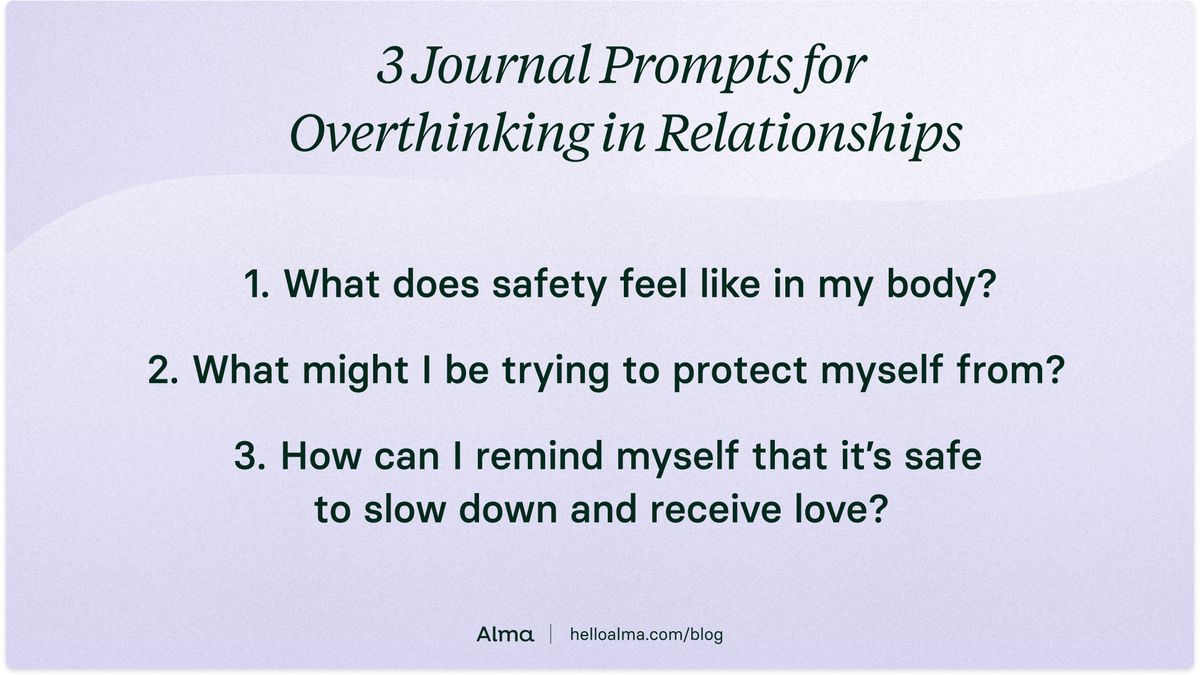
Why you might overthink in your relationship
As a mental health therapist, I’ve noticed some clear patterns related to overthinking. More often than not, overthinking is related to:
- An existing anxiety disorder: If you already have generalized anxiety, it can manifest in your relationship as overthinking. You may also find yourself overthinking in other areas of your life, for example at work or when dealing with your finances.
- Childhood coping strategies: If you learned early in life that paying close attention to others’ behavior kept you connected to them, this vigilance can carry into adulthood. Previous experiences of being hurt, betrayed, or abused can also make it difficult to trust within relationships. Overthinking is one way you may try to protect yourself from getting hurt again.
- Inconsistent communication or emotional unavailability from a romantic partner: When a partner’s behavior is unpredictable or confusing, we try to fill in the gaps ourselves. This creates a loop of overthinking: “”What did that mean? Are they upset? Did I do something wrong?”
- Codependency and external orientation: Codependent tendencies can intensify overthinking because you become highly attuned to someone else’s emotions. You may monitor their mood, adjust your behavior, or overextend yourself to keep the connection intact. Often, once we know someone else is okay, we feel okay. The threat—losing connection—feels reduced. But putting so much energy into others can make you lose sight of your own needs.
6 Ways to stop rereading texts and overanalyzing
Reducing overthinking in a relationship starts with taking time to stabilize or “regulate” your emotional state. Regulation makes room for curiosity and trust instead of control and fear. A helpful principle here is “regulate first, then relate.”
That might mean pausing before responding to a text or taking a break before continuing a difficult conversation.
Here are some ways to regulate your thoughts and emotions:
1. Pause and check in with your body
Slowing down the spiral starts with awareness. Ask yourself, “What is my body feeling right now?” Look for physical cues: heart racing, shoulders tightening, shallow breaths.
If you’re able to access your emotions, note which are coming up (a “feelings wheel” can be helpful here). This can help guide you back toward a calmer state.
2. Name it as overthinking
Simply acknowledge: “I’m overthinking right now.” Recognizing that your mind is “scanning for danger” can slow your thinking, whether you notice it in the moment or afterward.
3. Ground yourself
Grounding exercises for relationship anxiety and overthinking can help you get back into the present moment.
Here’s a simple one to try: Place a hand on your heart or belly and take several deep, slow breaths. (If you’re with them, you might ask your partner to take a few breaths with you. This can interrupt spiraling and create connection.)
4. Reframe your need
If you’re overthinking, you may believe that what you need are more answers. In reality, it could be that you actually need a sense of safety within your relationships. Thinking to yourself, “I need safety,” can shift you out of the mode of urgently seeking information.
5. Take a long-enough break
You can’t have a meaningful, productive conversation when you’re in survival mode. It’s okay to take space to regulate yourself, as long as you’re clear about when you will be ready to regroup (and you follow through).
You can try saying: “I’m feeling overwhelmed. I’m going to take an hour and then come back to finish this conversation.”
6. Create a code word
Some couples use an agreed-upon code word (like “red,” or “take 5”) to signal overwhelm. It communicates your needs without requiring explanation in the moment.
When should I seek professional help for overthinking in relationships?
Overthinking doesn’t mean you’re “too much” or “too sensitive.” It usually means your nervous system is trying to protect you. With awareness and regulation, you can build more stable, secure connections. If this feels hard to do on your own, a therapist can help.
What to expect from therapy for relationship-focused anxiety:
- Understand your needs and gain compassion for them
- Identify how past experiences shape your attachment style (and reactions) in the present
- Practice communicating needs, boundaries, and emotions
- Reduce cycles of reassurance-seeking, rumination, or emotional withdrawal
Take action:
Thinking too much? A therapist can help.
If you struggle to feel secure in relationships, working with a therapist will help you surface root causes, repair past wounds, and make changes that lead to deeper, more trusting bonds. Book a consultation to take the first step toward a more satisfying love life.
Related Articles






Dec 22, 2025




Looking for a therapist?
Get tips on finding a therapist who gets you.
By submitting this form, you are agreeing to Alma's privacy policy.