Ask Alma: Is My Friend's Self-Diagnosed Autism Real?
Self-diagnosed autism is valid without an official diagnosis. Our advice columnist explains why and how to support a friend who's exploring it.
Ask Alma is an advice column helping you to untangle questions about therapy, relationships, identities, and mental health from a peer perspective. Columnist Sam Dylan Finch shares his insights gained from nearly a decade of experience as a neurodivergent advocate and journalist specializing in mental health and wellness.
Key Takeaways
- Self-diagnosed autism can be a meaningful form of self-identification, especially when formal assessment is difficult to access.
- You usually can't tell whether someone is autistic based only on how they seem to you. Masking can make autistic traits less visible.
- A formal diagnosis and self-identification are not the same thing, but someone does not need a formal autism diagnosis to explore their experiences in therapy.
- Alma lets clients search for therapists who list Autism Spectrum as a specialty and filter by insurance, format, availability, and other preferences.
- If a friend tells you they think they're autistic, curiosity and support are usually more helpful than trying to prove or disprove their identity.
Self-diagnosed autism can bring up complicated feelings, especially if you're autistic yourself and don't recognize the same traits in someone you know.
But autism doesn't look the same in everyone, and what you see from the outside may only be part of the picture.
If your friend is exploring whether they might be on the spectrum, it’s not up to you to decide whether they're "really" autistic. You can listen, stay curious, and give them room to understand their own experience.
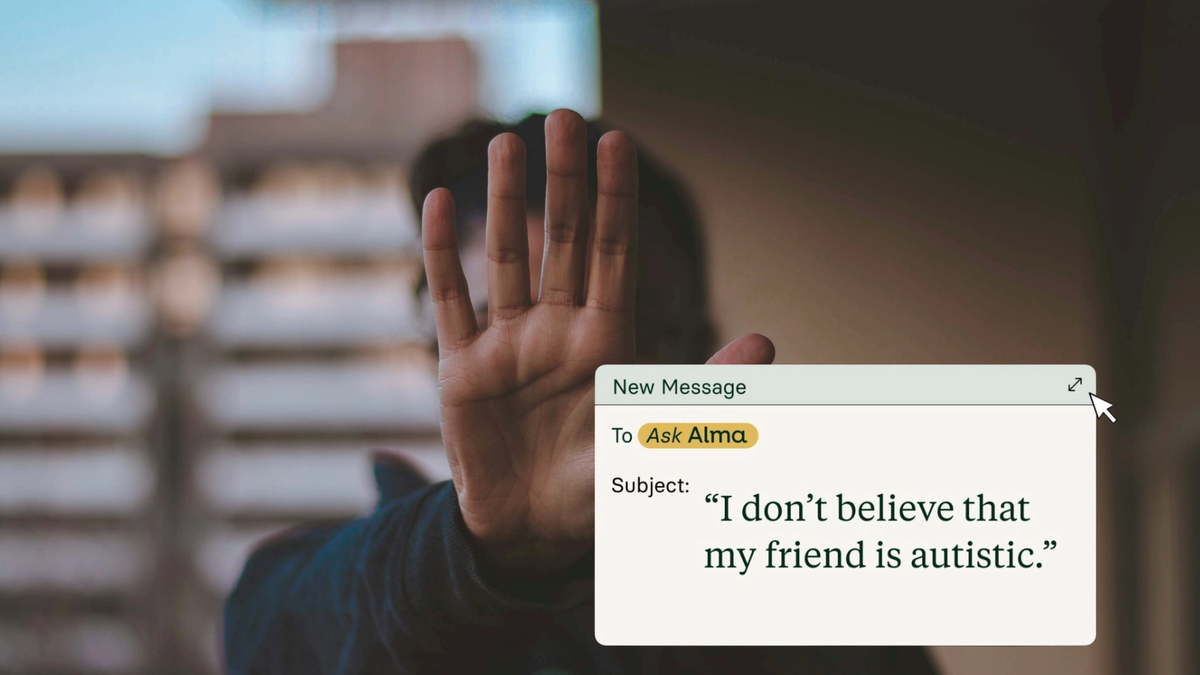
Q: My friend has recently self-diagnosed herself as autistic. I’m autistic as well, and to be honest, I just don’t see her as being autistic, and I’m frustrated that she’s claiming this label. Do I say something?
SDF: Friend, I really hear your concern. No one wants to see someone we care about hopping on the misdiagnosis train, headed for Lack of Support Station.
I can appreciate that you want to make sure your friend isn't falling down a rabbit hole that ultimately isn't helpful! And the fact that this is frustrating you makes me wonder what might be going on underneath.
There are a few points I want you to consider before giving your friend any feedback on her self-diagnosis, offered with care for you and your friend.
Is self-diagnosed autism valid?
Self-diagnosis can be a valid form of self-exploration, particularly for adults who face barriers to formal autism assessment. Cost, long waitlists, and fear of not being believed by professionals can all make diagnosis difficult to pursue.
That doesn't mean self-diagnosis and a clinical diagnosis are identical. Formal diagnosis requires assessment by a qualified professional, and self-report screening tools alone cannot confirm autism.
But someone does not need a formal autism diagnosis to begin exploring their experiences or to seek therapy. Alma's directory includes therapists who list Autism Spectrum as a specialty. and clients can browse by specialty, insurance, session format, availability, and other preferences.
How familiar are you with the concept of masking?
Your question immediately reminded me of how autistic people, especially those diagnosed later in life, are often super adept at masking and concealing their neurodivergent traits, even from those who know them pretty well.
Your friend may not seem autistic to you, but that doesn't automatically mean that she isn't. Masking, sometimes called camouflaging, can include suppressing autistic behaviors, copying social cues, or finding other ways to blend into neurotypical expectations.
A 2025 systematic review found that autistic adults use a range of camouflaging strategies, which helps explain why autism may be less visible from the outside. If people don't believe you're autistic because you don't "look autistic," masking may be part of what they're missing.
I'm also not sure if you or your friend is a woman or was assigned female at birth, but the mainstream idea of what autism "looks like" is not always a truthful representation of autism, especially for marginalized folks.
For me, I didn't realize I was autistic until later in life. My ability to mask with humor, combined with these less represented presentations of autism, made it easy for most people in my life to dismiss me, even after I was officially diagnosed.
There could be a lot you both don’t know about yet, even as an autistic person yourself. Maybe this is an opportunity for you to learn and explore together.
Everyone deserves to have their own process!
Autistic or not, your friend has the right to explore what labels make sense for her, and which ones feel supportive, so long as she isn't harming someone else.
She may change her mind later or she may not, but either way, she gets to have the same messy journey as the rest of us.
That said, I know self-diagnosis is uncomfortable for some folks.
Many people imagine someone watching a TikTok and trying on autism as if it's a costume, and that can provoke a whole lot of different emotions, including skepticism, offense, and yes, frustration.
And, it's so important to remember that self-diagnoses are not as trivial as some in the media portray them to be.
Not only is self-diagnosis accurate a great deal of the time, especially with assessments like the RAADS becoming more widely available and only improving those outcomes, but self-diagnosis can be more accurate than a clinical diagnosis, especially if the assessor is using outdated stereotypes to diagnose.
Not to mention, getting assessed can be prohibitively expensive, and having autism on a medical record can have its own risks.
Autistic psychologist Amy Marschall, PsyD, does a great breakdown of the legitimacy and complexities of self-diagnosis in this article, if you're curious to learn more. The bottom line: An autism diagnosis, whether it's self-diagnosed or clinically validated, is a deeply personal process.
But we have evidence to suggest that regardless of where that diagnosis comes from, we have more reason than not to believe folks when they identify themselves as autistic.
And if your friend happens to be in the small percentage of folks who end up not being autistic, that's also okay! That does happen sometimes, and there's nothing wrong with exploring a label to see if it supports you, just to decide later that it doesn't quite fit.
As her friend, I'd consider how you can support her self-discovery process, without worrying too much about where it takes her. You are responsible to her as a friend, but not responsible for her or her journey.
As gently as possible, I'd encourage you to explore where your resistance might be coming from.
In my personal experience, when we have the urge to play gatekeeper in our own communities and decide who gets to claim a label and who doesn’t, it’s almost always about something bigger.
Maybe you had to fight to be believed about your own autism diagnosis. Maybe getting diagnosed took years, money, or emotional energy. Maybe you've heard "you don't look autistic" enough times to feel protective of an identity that others have questioned or minimized.
Those feelings deserve care, too. But your friend isn't responsible for the stereotypes, disbelief, or gatekeeping autistic people experience, and questioning her identity won't undo them.
If her process is genuinely upsetting or triggering for you, you're allowed to set boundaries. You can care about your friend without becoming responsible for deciding whether her self-diagnosis is correct.
Looking for a therapist?
There's no freedom to be found in appealing to those who are committed to misunderstanding and marginalizing us and others like us.
(Thank you for allowing me that soapbox moment, by the way. Even if it isn't relevant to you as the asker, it's certainly important for some who are reading along.)
With all that in mind, I'm wondering if you can recall what it was like to first explore this part of yourself.
Knowing how vulnerable, exciting, scary, and overwhelming it might have been, ask yourself: How do you wish others had supported you? What resources made an impression on you?
Put another way, I'd love to refocus: How can you embody the types of community you longed for when you first accepted this about yourself?
If you have a genuine concern that she is misinformed, you might ask her if she’s open to you sharing those resources (assuming you are able and willing to provide them).
Just be sure to center her needs and approach her with curiosity, rather than leading with the assumption that her mind needs to be changed.
Of course, if you find that the way she speaks about autism relies on stereotypes and is harmful to listen to, you may need to set a boundary and let her know you aren’t open to talking about the diagnosis at this early stage of her journey.
You can be gentle but firm on what kinds of conversations you’re open to having! It's okay to opt out if your friend's process is triggering or upsetting for you.
Ultimately, no one "wins" when we turn someone's identity and self-exploration into a debate.
For starters, we accidentally begin modeling the types of skepticism and questioning that allistic (non-autistic) people leverage against us, and that's no good for anyone.
But even if you're right, and your friend later decides autism no longer fits, I worry that she won't see this in the helpful way you're intending.
I know a lot of us who are autistic have had to learn the hard way that we can be as logical and precise with our words, and still, much of the time, the thing that people remember is the flavor, or put another way, how our words left them feeling.
You could carefully explain diagnostic criteria and your impression of her, and she still may be left wondering why being "correct" mattered more than supporting her self-exploration.
Unless you have reason to believe something harmful is happening, I think you can trust that your friend will arrive at the label that best supports her, given time.
And who knows, maybe this is an opportunity for closeness! If she's genuinely interested in learning more about autism, she may have told you because she trusts your lived expertise and was hoping to connect more deeply.
Maybe you can lean into what you know about your experience, while committing to keeping an open mind as you explore more together from her point of view.
Next steps: Ask your friend what kind of support she needs from you, and take time to assess if you can provide that. If you can’t, explore what’s coming up for you emotionally. If you can, commit to providing that support with an open mind and no expectations attached.
Related Articles


Aug 9, 2024


Looking for a therapist?
Get tips on finding a therapist who gets you.
By subscribing to emails from Alma, you are agreeing to Alma's privacy policy.